Bone Valley's Phosphate Heritage and What It Means for Land-Clearing Debris
Polk County sits at the historic center of the U.S. phosphate industry, in a region nicknamed Bone Valley for the Miocene-era fossils found in its mining spoil. Here's how that heritage connects to land-clearing debris today.
8 min readUpdated 2026-04-18By Seyward Bros Dumpster Rental Polk County
A Region Named for Its Fossils
Central Florida's phosphate deposits sit in a region historically nicknamed "Bone Valley," for the abundant Miocene-era fossil bones found in phosphate mining spoil, and it underlies large portions of Polk County along with neighboring Hillsborough, Manatee and Hardee counties. The "Great Florida Phosphate Boom" began in the 1890s, not long after high-grade phosphate was first discovered in the region, and Polk County became — and remains — the historic center of the entire U.S. phosphate industry.
A Real, Documented Heritage
The town of Mulberry, in Polk County, is home to the Mulberry Phosphate Museum, a direct reflection of just how tied the county's identity is to the industry. Today, Mosaic Company, one of the world's largest producers of phosphate and potash fertilizer, maintains major operations in the Polk County/Bone Valley region — phosphate mining and processing remains one of the county's historically defining industries alongside citrus and, more recently, logistics and warehousing. This is heritage worth knowing about a place, not a topic we take a position on regarding current environmental policy — phosphate mining is a genuinely sensitive, sometimes contentious subject in Central Florida, and we're a debris-removal business, not a voice in that conversation.
What Land-Clearing Debris Looks Like on Former Agricultural or Mined Land
Property across Polk County sitting on or near historic phosphate or citrus land often carries its own particular land-clearing profile. Reclaimed or formerly agricultural parcels can include old fencing, irrigation equipment, outbuilding remnants, and vegetation that's grown in unmanaged for years. Clearing a parcel like this for new development, a homesite, or agricultural reuse generates a real mix of debris — vegetative material, old structures, sometimes buried debris that surfaces once clearing starts — different from a straightforward residential cleanout.
Vegetative vs. Structural Land-Clearing Debris
It's worth separating the two categories when planning a land-clearing project. Vegetative debris — cleared brush, small trees, root balls — is bulky but comparatively light, and volume tends to be the limiting factor for container sizing. Structural debris — old fencing, outbuilding remnants, concrete pads, equipment — runs heavier, and weight becomes the real constraint the same way it does on a demolition job. Most land-clearing projects generate some mix of both, and describing the balance when you call helps us size the right container the first time.
Sizing for a Land-Clearing Project
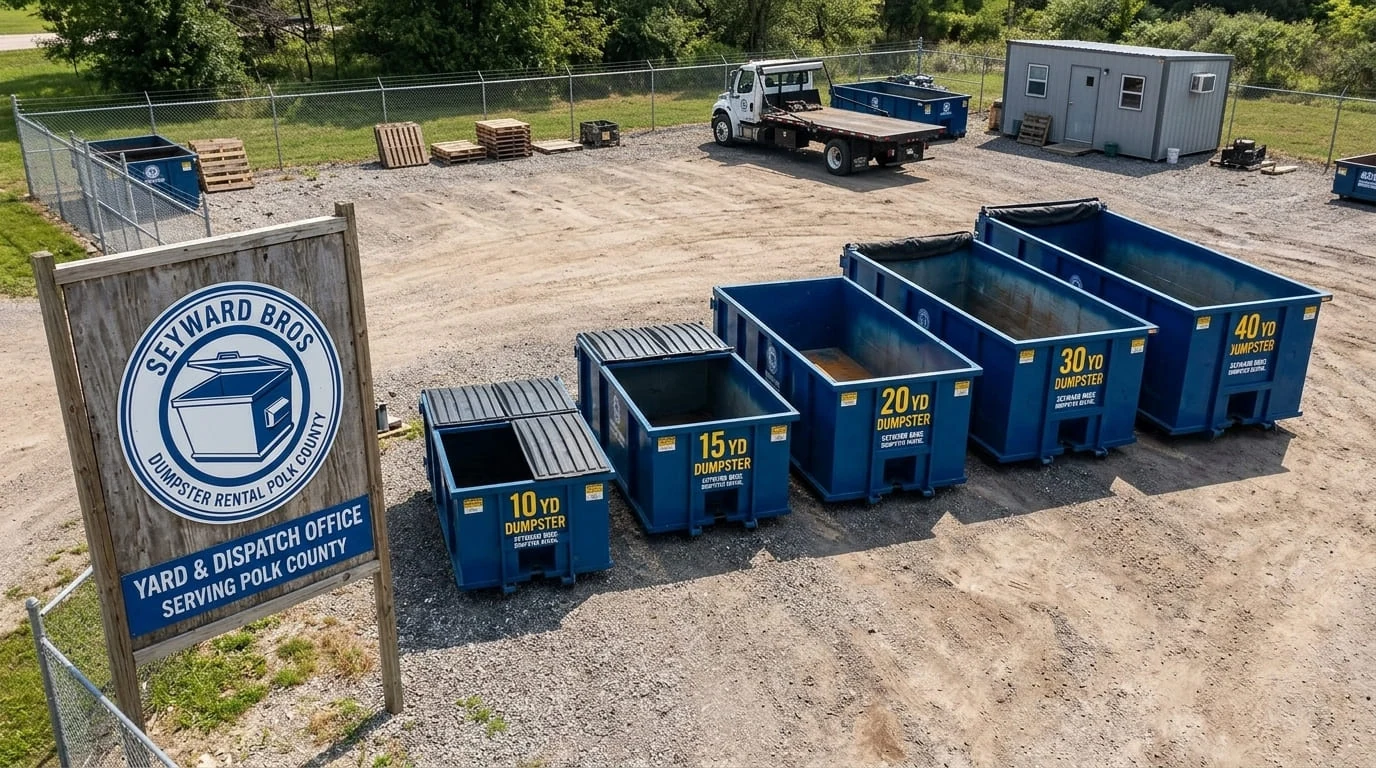
A smaller parcel clearing with mostly vegetative debris often fits a 20 yard. A larger property, or one with a meaningful amount of structural debris — old fencing, an outbuilding, equipment remnants — more often calls for a 30 or 40 yard, and larger commercial or agricultural land-clearing projects sometimes need multiple containers on a rotating schedule as clearing progresses across the parcel.
Roll-off dumpster sizes available in Lakeland, FL and across Polk County
Large construction jobs, commercial/industrial projects.
Booking a Container for Land Clearing
Whether you're clearing a residential lot, a former agricultural parcel, or a larger property anywhere across Polk County, call (863) 457-3737 and describe what's coming off the land — vegetative debris, old structures, or a mix of both. We'll size the container and, for larger projects, work out a rotating schedule as clearing progresses, priced flat-rate based on size, debris and duration.
Seyward Bros Dumpster Rental Polk County
Written by the team that coordinates every delivery out of our yard on 515 Mabel Ave in
Lakeland. We haul roll-offs across Polk County and Central Florida / the I-4 corridor every week. Questions about
your own job? Call (863) 457-3737.
Talk to a real person
Ready to book a container in Lakeland?
Call and describe the job. Flat-rate pricing, a sized container, and a delivery time on the same call.
Bone Valley is the historic nickname for Central Florida's phosphate-mining region, named for the abundant Miocene-era fossil bones found in phosphate mining spoil. It underlies large portions of Polk County and neighboring counties.
Is Polk County still a phosphate-producing region today?
Yes — Mosaic Company, one of the world's largest phosphate and potash fertilizer producers, maintains major operations in the Polk County/Bone Valley region. Phosphate mining remains one of the county's historically defining industries alongside citrus and logistics.
What size dumpster do I need for a land-clearing project?
A smaller parcel with mostly vegetative debris often fits a 20 yard. A larger property or one with structural debris like old fencing or an outbuilding more often calls for a 30 or 40 yard.
Can you handle a multi-container schedule for a larger land-clearing project?
Yes — call (863) 457-3737 and describe the property and scope, and we'll work out a rotating container schedule as clearing progresses.
Polk County leads all of Florida in citrus production, grown on the historic, elevated sand ridge known simply as 'The Ridge.' Here's a cleanout guide for grove owners and agricultural landowners across the county.
Picking the wrong size dumpster is the most common, and most avoidable, mistake on a cleanout or remodel across Polk County. Here's a straightforward way to get it right the first time.
Downtown Lakeland's Munn Park Historic District carries the name of the man who founded the city itself. Here's what cleaning out or renovating a home or storefront near it actually involves.