Roofing Tear-Off Dumpster Sizing Guide for Polk County Homeowners
Roofing debris behaves nothing like ordinary household junk — it's dense, heavy, and often hits a container's weight limit long before it looks full. Here's how to size it right the first time.
7 min readUpdated 2026-04-25By Seyward Bros Dumpster Rental Polk County
Why Roofing Debris Sizes Differently
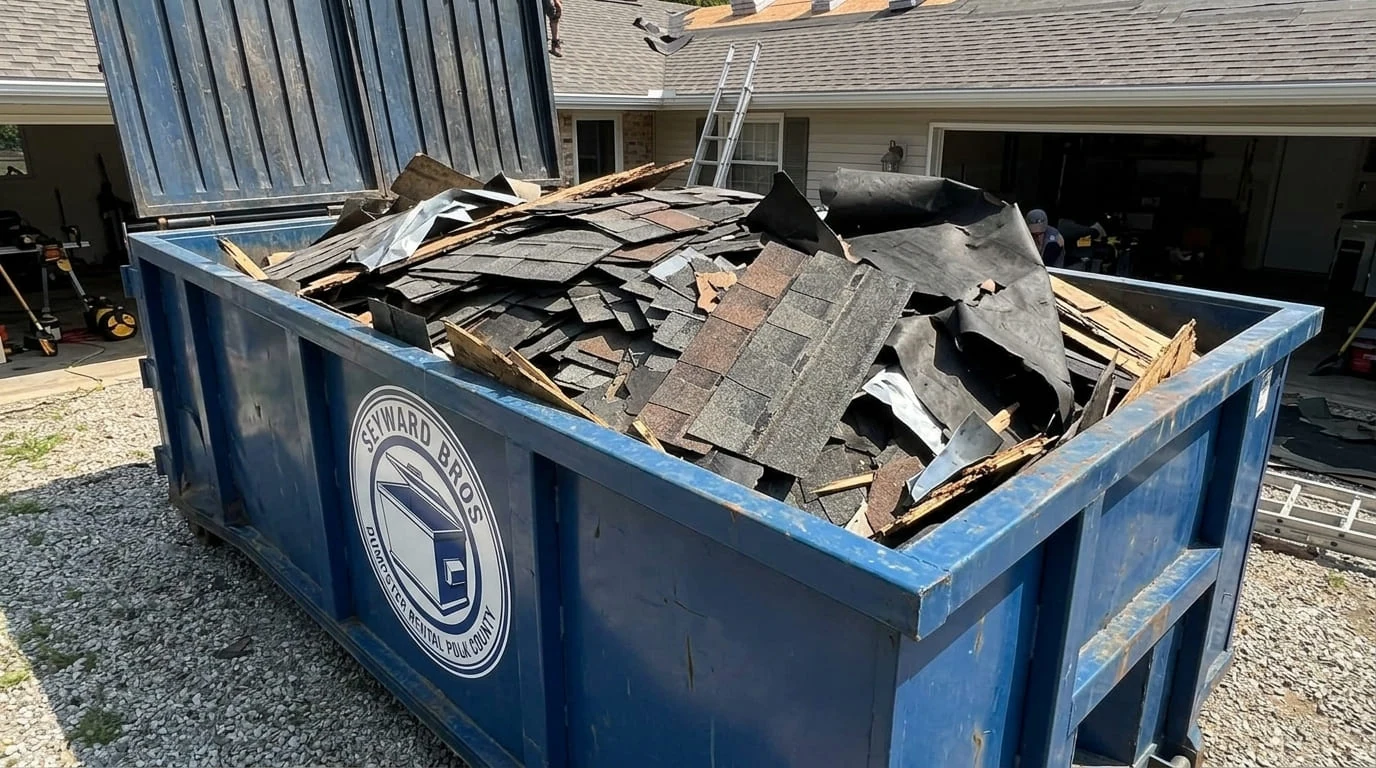
Most people size a dumpster by picturing how much space debris will take up — but roofing tear-off debris breaks that mental model almost immediately. Shingles, underlayment and any tile or wood shake underneath are dense material, and a roofing job can hit a container's included weight allowance well before the box looks visually full. That's exactly why our smallest size, the 10 yard, is explicitly built around roofing shingles and small cleanouts on a tight driveway — it's sized for weight, not just volume.
Layers Change the Math
One thing worth passing along from roofing crews we work with regularly: the number of tear-off layers isn't always obvious from the ground. It's genuinely common for a homeowner to be surprised when a roofer finds two or three layers of old shingles stacked on the deck, or discovers a different underlying material than expected. That's exactly why we'd rather size a container after a roofer has assessed the deck — the difference between guessing and knowing is real money and real time.
Matching Size to Roof Scope
A single-layer tear-off on a smaller roof — the kind of small cleanout our own size chart describes — typically fits a 10 yard, rated for 50 to 70 bags. A larger roof, multiple shingle layers, or a job with tile or heavier material typically calls for a 20 yard, rated for 110 to 130 bags — our size chart specifically calls out roofing jobs and light construction as a 20-yard use case. A large commercial roofing job, or a residential tear-off combined with other renovation debris, can push into the 30 or 40 yard range.
Roll-off dumpster sizes available in Lakeland, FL and across Polk County
Large construction jobs, commercial/industrial projects.
Storm-Damage Roofing Jobs
Polk County sits in the path of Florida's real, recurring hurricane season, and roof damage is one of the most common follow-on repair jobs after a significant storm — see our hurricane season prep guide for the full local storm history. Storm-damage roofing jobs often move faster than a planned renovation, with insurance timelines and contractor schedules driving urgency. We're set up for that pace — call early and most Lakeland and Polk County orders go out the same or next day, which matters when a roofer needs a container on-site before the next round of weather.
What Roofers Wish Homeowners Knew About Sizing
It's genuinely common for a homeowner's own assumption about their roof's material or layer count to be wrong once a roofer actually gets on the deck. That's not a knock on anyone's judgment — it's just not something visible from the ground. Getting the container sized after that first assessment, rather than before, is the single biggest thing that prevents a mid-job size upgrade or an overweight-load surprise at pickup.
Booking a Roofing Dumpster
Whether you're planning a routine reroof or dealing with storm damage, call (863) 457-3737 and describe the roof — size, material, and whether your roofer has already assessed the number of layers. We'll size the container to match and get it delivered on your roofer's timeline, priced flat-rate based on the size, debris and duration.
Seyward Bros Dumpster Rental Polk County
Written by the team that coordinates every delivery out of our yard on 515 Mabel Ave in
Lakeland. We haul roll-offs across Polk County and Central Florida / the I-4 corridor every week. Questions about
your own job? Call (863) 457-3737.
Talk to a real person
Ready to book a container in Lakeland?
Call and describe the job. Flat-rate pricing, a sized container, and a delivery time on the same call.
Why does a roofing job need such a large dumpster if it doesn't look like much debris?
Shingles, tile and underlayment are dense and heavy, so a roofing job often hits a container's weight allowance well before it looks full by volume — especially with multiple layers of old shingles.
What size dumpster do I need for a roofing tear-off?
A single-layer tear-off on a smaller roof often fits a 10 yard (50–70 bags). A larger roof, multiple layers, or heavier material like tile typically calls for a 20 yard (110–130 bags).
Should I get a dumpster before or after my roofer assesses the job?
Usually after — once you know the number of shingle layers and the full scope, we can size the container correctly instead of guessing.
Do you deliver quickly for roofing jobs that follow storm damage?
Yes — call (863) 457-3737 and describe the damage and your roofer's timeline, and we'll get a container scheduled to match.
Polk County doesn't face storm surge, but it faces real wind, rain and flooding risk from tropical systems — both Hurricane Milton and Hurricane Ian left confirmed local marks. Here's how to plan around it.
Before you dig anywhere in Florida — a fence post, a landscaping project, a new footing — the service that actually covers the state is Sunshine 811. Here's what that means in practice for a Polk County project.
Polk County's real construction-and-demolition disposal facility is North Central Landfill in Winter Haven — not any other name you might have seen floating around online. Here's how it actually works.